

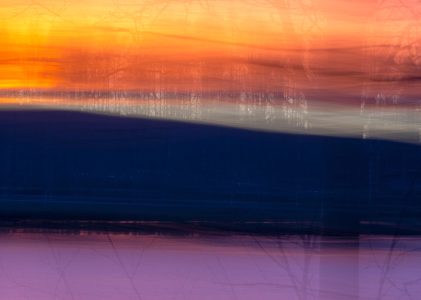
Where Time and Movement Meet: The ICM World of Kaisa Sirén
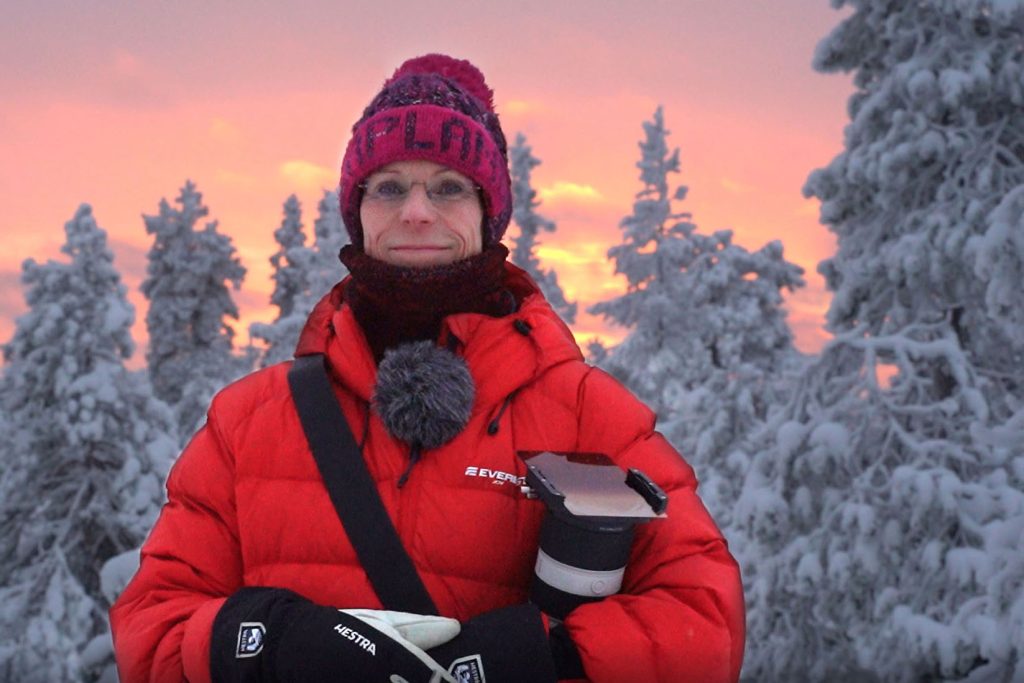
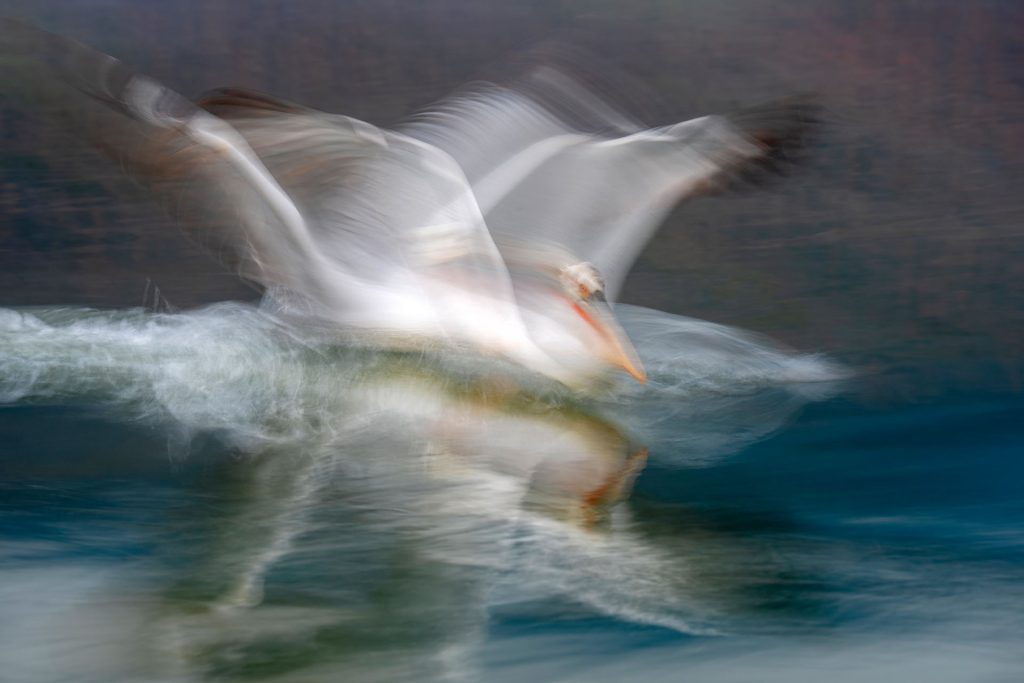
“When I look at the finished image, I often wonder how it turned out the way it did,” Kaisa Sirén says. “That’s the salt and pepper of this photographic style — and it keeps the photographer humble.”
Kaisa Sirén’s fascination with the ICM (Intentional Camera Movement) technique began in the early 2000s during a week-long coach tour in Iceland.
“I went to Iceland to photograph magnificent landscapes, like icebergs,” she recalls. “Instead, I was met with rain, clouds, and fog – through the bus window, there was hardly anything to see.”
To pass the time, Kaisa began experimenting with different shutter speeds and moving the camera. Even the ground itself started to appear compelling and painterly in the images. Today, selling nature photographs as wall art is far from easy, but 10 of the ICM images Kaisa created in Iceland later found their place on a restaurant wall.
A Deliberate Result – or a Surprise?
When photographed documentarily, images taken by different photographers in the same situation often resemble one another. With the ICM technique, the result is different for everyone. Even so, the photographer can aim for a particular kind of outcome.
“I’ve used ICM for commissioned work where a specific atmosphere was requested,” Kaisa explains. “In those cases, advance planning plays a major role – choosing the subject and planning the exposure time and movement paths.”
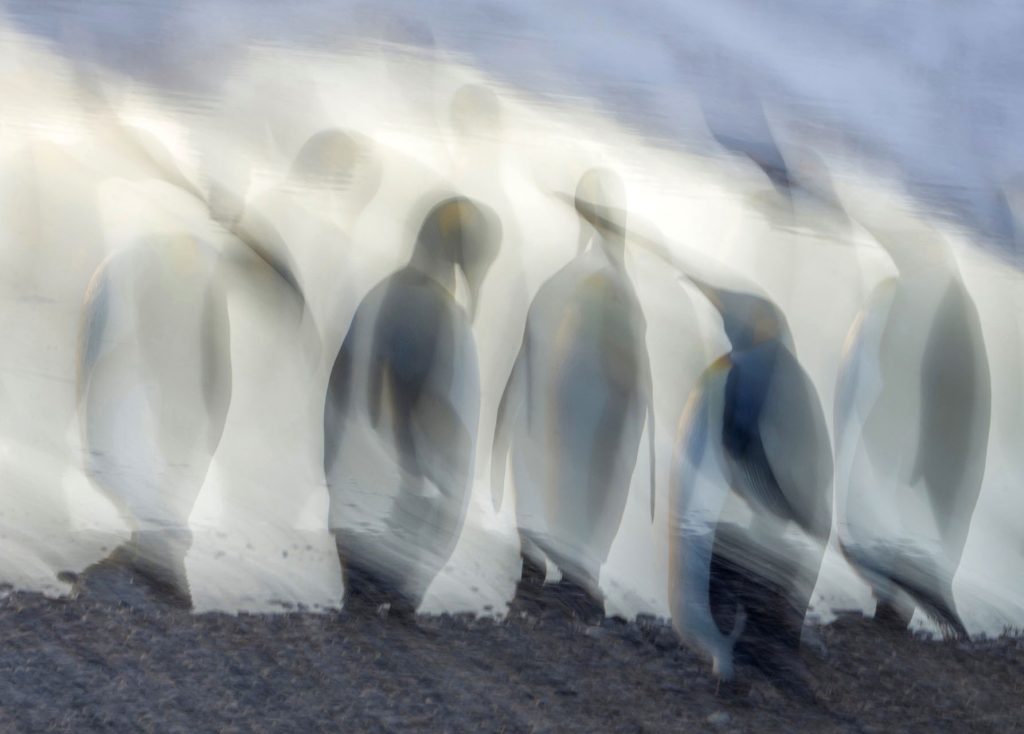
Kaisa does not use multiple exposures, even though her images may sometimes appear that way. Instead, she works with long exposure times and closely positioned subjects, and may at times cover the lens with her hand as she turns it, capturing only the elements or tones she wants to include. A brief pause, for example, on a red jacket can introduce a hint of violet into an otherwise blue-toned image, without the jacket’s form ever appearing.
To achieve intentional results rather than relying on chance, it is important to understand how different combinations affect the outcome. Should the camera be moved at the beginning of the exposure or toward the end? How fast, and in which direction? How can one subject become dominant – or even partially sharp – while another contributes only color or abstract elements?
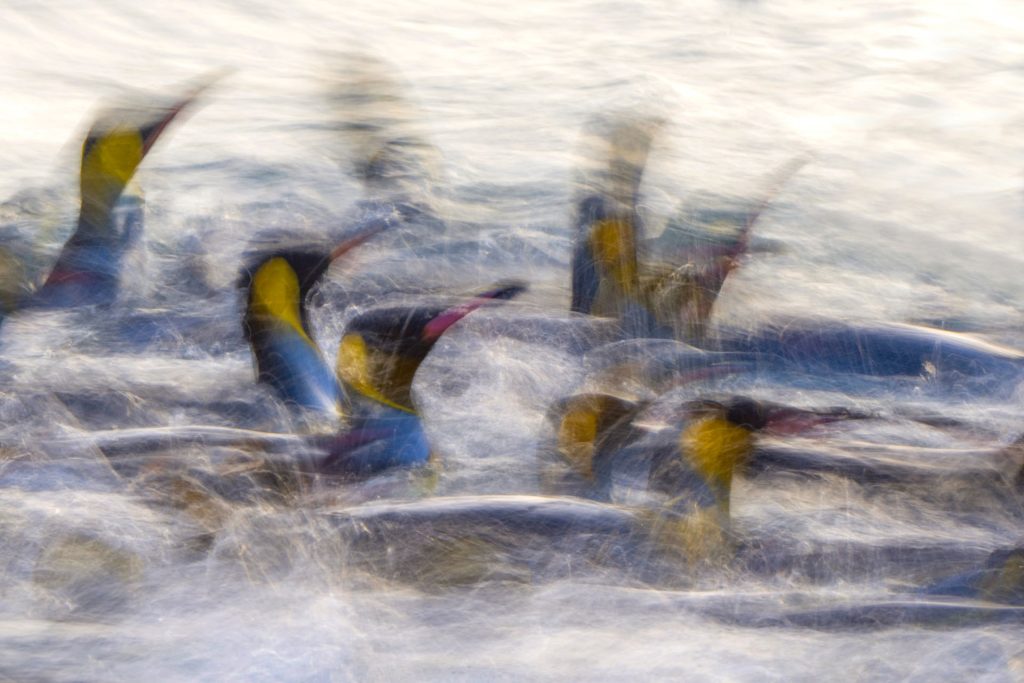
Although camera movement is central to ICM photography, it is best to begin by practicing with shutter speed.
“When starting out with ICM, it’s best to change only one variable at a time,” Kaisa advises. “That way it’s easier to understand what affects what.”
Kaisa herself usually starts with a shutter speed of 0.6 seconds and adjusts from there according to the situation. Once she has tested different exposure times using the same movement, she begins to vary the movement itself – its speed, scale, and direction. Kaisa has been working with the ICM technique for over 20 years and continues to learn.
A relaxed attitude and a willingness to experiment matter more than top-tier gear
Kaisa always shoots handheld. She moves the camera with her whole body, so a tripod would only get in the way. She shoots with Sony and uses two A1 camera bodies. Typically, she works with a 70–200 mm lens for ICM photography, and occasionally a 100–400 mm. With longer and heavier lenses, controlling the movement would be more difficult. In ICM photography, optical perfection is not as crucial as in traditional photography – sometimes a more affordable or imperfect lens can even produce a more intriguing result.
“I enjoy shooting with a Helios 50mm lens, for example – it’s so bad that it’s good,” Kaisa remarks. “With the Helios, depth of field is unpredictable, the rendering is soft, and only a small area remains sharp. The bokeh is fantastic, and the result feels very narrative.”
The ICM technique makes the invisible visible
Kaisa has photographed extensively in exotic locations such as the Galápagos Islands, the Arctic Ocean, and the Antarctic. Still, she continues to experience an inner conflict when faced with iconic wildlife subjects. Is it acceptable, for instance, to experiment with the camera when photographing a polar bear?
“I still take documentary images,” she says. “But over the years, my confidence and courage have grown. I could easily return home with only ICM images and leave the documentation to others.”
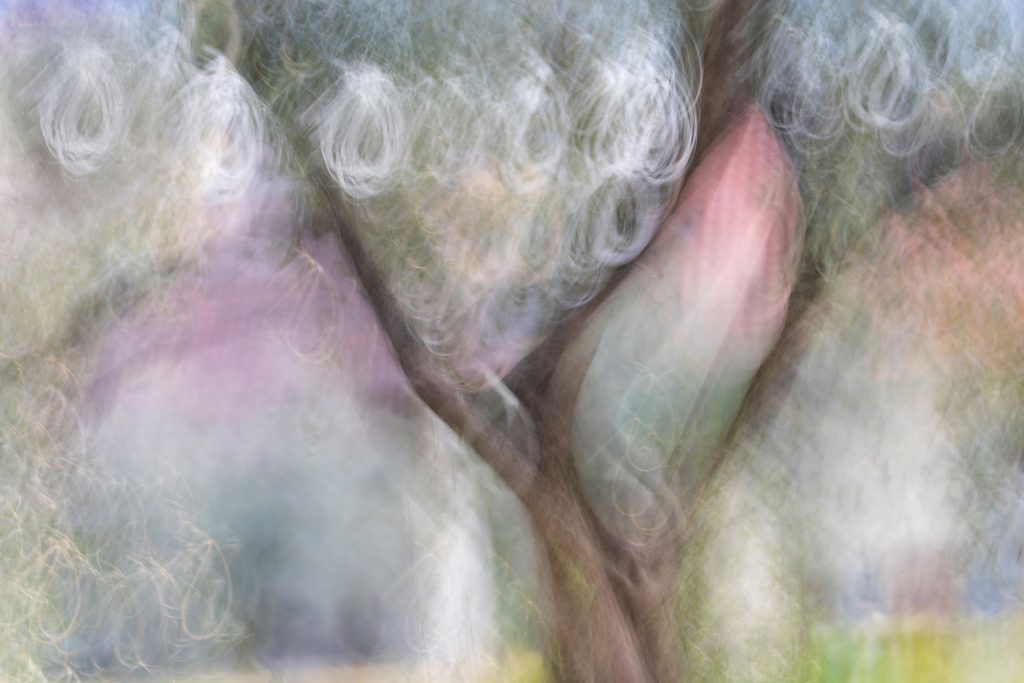
Inspiring subjects don’t require traveling to the ends of the earth. With the ICM technique, even ordinary, overlooked subjects gain a new sense of mystique. One’s own backyard can be a true treasure trove for an ICM photographer – even when the light is far from perfect. Kaisa captures beautiful morning light like other photographers, but she also finds that ICM offers great possibilities on overcast days. She distills her artistic practice into four core elements: forest walker, color seeker, outsider, and visualiser of the unseen. She moves through nature, searches for colors, remains an outsider, and makes the invisible visible.
“With the ICM technique, you can try to capture, for example, how trees communicate with one another,” Kaisa reflects. “The forest is full of untold stories.”
Want to learn more?
You can explore creative photography at ICM Photo Academy.